Should You Buy the Motorola Razr Plus 2025 in 2026? A Deep Dive
Introduction
If you’re anything like me, you grew up fascinated by the original flip phones—the tactile snap of closing it, the way it fit into a pocket, and the unmistakable satisfaction of shutting a call with a physical hinge. In 2025, Motorola rekindled that nostalgia with the Razr Plus, a device that promised to marry the retro charm of the classic Razr with all the technological prowess anyone in 2026 could want. But now, with the 2025 model competing against not just its contemporaries but also a slew of newer foldables and slabs, is the Razr Plus still worth buying in 2026? As someone who’s used this device as my daily driver for almost a year, I wanted to share my honest, firsthand take on whether it still stands up—or if it’s time to move on.
Why I Bought the Razr Plus 2025
In mid-2025, after years of using slabs, I found myself craving something different. The Razr Plus caught my eye immediately—not just because of the design, but because I was genuinely curious about whether a flip phone could genuinely fit into a modern workflow. I had reservations: durability, battery life, camera performance, and long-term usability were top of mind. But nostalgia is powerful, and the idea of owning something that "felt" unique won me over.
Design and Build Quality: Still a Head-Turner
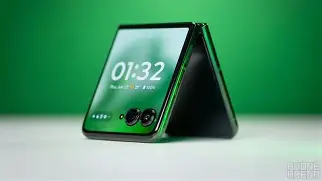
Even after months, I consistently receive the same question from colleagues and friends: "Wait, is that really a flip phone?" Motorola nailed the aesthetics. The Razr Plus 2025 retains that iconic, ultra-slim profile (when closed), with a glossy external shell that somehow resists fingerprints far better than I expected. The hinge, a big concern when I made the purchase, is solid. There’s a satisfying, gentle snap when I open or close it—and, surprisingly, it hasn’t loosened up or creaked in nearly a year. Still, it's not as seamless as the Galaxy Z Flip’s newer models, which feel less stiff and a bit more polished, especially when opening one-handed.
What I did not expect was how quickly I’d come to love the outer display. The 4-inch OLED cover screen is bright, responsive, and genuinely useful for glancing at texts, handling music, checking calendar invites, or replying to WhatsApp messages without unfolding the phone. However, there’s only so much you can do on that small square of glass—the keyboard feels cramped, and I found myself opening the device more often than I initially anticipated.
Display Technologies: An Inner and Outer Experience
The inside unfolds to reveal a 6.9-inch OLED that’s vivid and smooth, with a 165Hz refresh rate that keeps scrolling and animations feeling fast and fluid. Colors are punchy, blacks are deep, and outdoor visibility is… well, better than average. Bright California sunlight did make both screens hard to read at times, though, so if you’re outside all day, this might irk you.
There is a crease—it’s visible, especially against dark backgrounds and when you run your finger across it. At first, I obsessed over it, but within weeks it simply faded into the background for me. Occasionally, under direct sunlight, the crease catches the light awkwardly, which isn’t pretty, but in daily use, I stopped noticing it.
Performance and Software
Powering the Razr Plus 2025 is Qualcomm’s Snapdragon 8 Gen 3 chip, paired with 12GB RAM and up to 512GB of storage. In my usage—which includes a fair share of productivity apps, constant Slack/Teams sessions, video calls, light gaming, and way too many Chrome tabs—the phone never faltered. Multitasking is smooth, and app switching is instant.
Find top-rated Mobile Phones products at great prices.
View Offers →Motorola’s approach to Android is light—almost Pixel-like. I appreciate the lack of bloatware and the subtle customizations, like “Moto Actions” (chop to turn on flashlight, twist to open the camera). However, updates are still a pain point. While I’ve been getting regular security patches, the jump to Android 15 was delayed for months compared to other flagship brands. That’s not unique to Motorola, but it’s still frustrating knowing the hardware is capable but the software feels a step behind.
Cameras: Hits and Misses After Several Months
One of the biggest trade-offs with every foldable is camera hardware. The Razr Plus 2025 sports a 50MP main sensor and a 13MP ultra-wide, with a 32MP front camera tucked inside. On paper, it looks competitive—and, to a point, it is. In daylight, results are crisp, with realistic colors and respectable dynamic range. Taking selfies with the cover display is a delight; I got some of my favorite group photos simply because it’s easier to frame shots with the phone closed.
But in low light, noise creeps in, detail drops, and the processing feels a step behind what you'd get from Samsung’s Z Flip 6 or even Google’s Pixel 9. The ultra-wide lens is fine for scenery but lacks the sharpness and punch of competitors. The primary camera also tends to over-sharpen images, which isn’t everyone’s taste.
Video capped at 4K60 is steady and smooth, though stabilization isn’t up to par with the best out there. It’s not bad, but if you’re a content creator or videography enthusiast, this isn’t your phone. It’s a solid camera—good enough for Instagram, not enough for your next short film.
Battery Life and Charging: Good, Not Great
Early foldables struggled with battery life, so I was anxious about this category. The Razr Plus 2025 packs a 3850mAh battery, which, in real terms, meant about 4 to 4.5 hours of screen-on time for me. I’m usually down to 15% by evening if I’m not careful. With light use, I can make it until bedtime, but heavy days or lots of camera/5G quickly sap the charge.
Fast charging (wired at 44W) is handy; I can get from 10% to 80% in about 35 minutes, but wireless charging remains sluggish. One thing that bothered me: heat. The phone gets noticeably warm when charging and especially with heavy multitasking. It never got dangerously hot, but enough to notice when carrying in a pocket afterward.
Durability: How Does It Hold Up?
After months of daily opening, tossing in bags, and the occasional drop (including one from waist height onto a tile floor that made my heart stop), the Razr Plus 2025 still looks almost new. The hinge hasn't developed any play, and aside from tiny scratches on the outer shell, there’s little evidence of wear. To be clear, I’ve babied it more than some other phones, but it feels much more robust than most foldables I’ve owned previously. Still, the device is not dustproof—just water-repellent—so I learned to keep it away from the beach and pocket lint.
Find top-rated Mobile Phones products at great prices.
Shop Amazon →Call Quality, Connectivity, and Everyday Use
I was pleasantly surprised by call quality. Voices are clear and full, with no muffling or strange digital artifacts. 5G and Wi-Fi 7 performance are solid, with none of the weird handoff bugs I encountered on older foldables. Bluetooth connections (especially multiple audio sources) are consistently reliable. The phone is lightweight for a foldable and slides into any pocket, a feature I now consider non-negotiable.
The fingerprint sensor, sadly, is not under the screen—it’s side-mounted. I found it accurate and fast, but it’s awkward to reach when opened one-handed, and the placement feels like a compromise. Face unlock works but isn’t secure enough for banking apps.
Pros and Cons of the Motorola Razr Plus 2025
- Pros:
- Eye-catching, nostalgic design with compact form factor
- Robust outer display; useful for notifications and basic tasks
- Fast and fluid performance with minimal software bloat
- Satisfying build quality and surprisingly durable hinge
- Quick charging and wireless charging support
- Fun, flexible camera experience for selfies and casual photography
- Clean Android experience with handy Moto features
- Cons:
- Battery life is average—just enough for a typical day, but not more
- Camera performance, especially in low light, isn’t flagship-tier
- Visible crease on the main display under certain lighting
- Side-mounted fingerprint sensor can be awkward to use
- Software updates lag behind competitors
- Heats up during charging and heavy multitasking
- Not fully waterproof or dustproof; durability is better, but not invincible
How Does the Razr Plus 2025 Compare?
I’ve had short hands-on time with other foldables, so here’s a simple comparison of the Razr Plus 2025 with its current main rivals as of 2026:
| Feature | Razr Plus 2025 | Samsung Galaxy Z Flip 6 | Oppo Find N5 Flip | Google Pixel Fold 3 |
|---|---|---|---|---|
| Main Display | 6.9" OLED, 165Hz | 6.7" AMOLED, 120Hz | 7.0" AMOLED, 120Hz | 7.2" OLED, 120Hz |
| Cover Display | 4.0" OLED | 3.4" AMOLED | 3.8" AMOLED | 5.8" OLED (bar style) |
| SoC | Snapdragon 8 Gen 3 | Snapdragon 8 Gen 3 | MediaTek Dimensity 9400 | Google Tensor G4 |
| RAM / Storage | 12GB / Up to 512GB | 12GB / Up to 1TB | 12GB / Up to 512GB | 12GB / Up to 512GB |
| Main Camera | 50MP | 50MP | 64MP | 50MP |
| Ultra-wide Camera | 13MP | 12MP | 48MP | 12MP |
| Battery | 3850mAh | 3700mAh | 4050mAh | 4800mAh |
| Water/Dust Resistance | Water-repellent only | IPX8 | Water/dust resistant | IPX8 |
| Software Support | 2 OS updates | 4 OS updates | 3 OS updates | 5 OS updates |
| Weight | 190g | 187g | 188g | 285g |
A Quick Buying Guide: Who Is This For?
Over the past months, I’ve realized the Razr Plus 2025 isn’t for everyone. Here’s what I’d tell you if you’re making this decision in 2026:
Buy the Razr Plus 2025 if you:
- Crave a phone that stands out and blends nostalgia with modern features
- Value pocketability and portability
- Want a no-bloatware Android experience
- Prioritize selfies and social photos over professional low-light photography
- Are okay with charging your phone daily and aren’t on the road all day
- Can live with the certainty that you’re not getting the fastest OS updates
Consider something else if you:
- Demand flagship-level cameras and frequent software updates
- Work in harsh, dusty, or wet environments
- Rely on true all-day battery endurance without charging breaks
- Plan to keep your phone longer than two years
- Are sensitive to visible screen creases or hinge quirks
Conclusion: A Surprisingly Delightful Throwback—But Not for Everyone
After living with the Motorola Razr Plus 2025 as my main phone for several months, I can genuinely say it brought back a sense of fun I hadn’t felt in years. There’s something oddly joyful about snapping open your phone, using the compact cover display for music or notifications, and having a device that still turns heads in 2026.
But it’s not perfect—and that’s okay. Its quirks (from battery anxiety to average low-light camera performance and the risk of the hinge collecting dust) mean that it’s a phone best suited for those willing to accept a few compromises for a lot of character. Many will still be better served by a more “mainstream” slab or a newer foldable. But if you, like me, long for a device that’s both a tool and a conversation starter, the Razr Plus 2025 still deserves a look—creases and all.