Manfrotto One vs Sachtler Ace M Ms Mk Ii Review: Performance, Price, and Verdict
I have spent the last decade chasing the perfect balance between portability and rock-solid stability. As a solo operator who frequently jumps between corporate interviews and fast-moving documentary sets, my tripod isn't just a stand; it is the single most important piece of tactile interface between my creative intent and the final image. After years of relying on mid-range aluminum sticks that eventually developed "the shakes" or "the stickies," I decided it was time to invest in a serious entry-level professional system. For the past six months, I have been living with two of the most talked-about systems in this category: the Manfrotto One and the Sachtler Ace M MS MK II. I didn't just test them in a showroom; I hauled them through muddy fields, set them up in cramped elevators, and used them to track high-speed action at a local cycling event.
The choice between Manfrotto and Sachtler is often framed as a rivalry akin to Canon vs. Nikon or Mac vs. PC. Manfrotto has always felt like the accessible, ubiquitous choice for the "prosumer," while Sachtler carries the pedigree of high-end cinema and broadcast. However, with the release of the Manfrotto One and the MK II update to the Ace M, the gap has narrowed significantly. In this review, I’m going to share my honest findings from months of daily use. I’ll go into the specifics of fluid drag, the frustration of leg locks, the reality of carrying these over my shoulder for three miles, and ultimately, which one consistently earned a spot in my trunk when I only had room for one.
The First Impression: Out of the Box
When I first unboxed the Sachtler Ace M MS MK II, I felt that familiar sense of "the Sachtler touch." Even their entry-level line uses the glass-fiber reinforced composite that makes the head feel incredibly light yet dense. It doesn’t feel like cheap plastic; it feels like a precision instrument. The Manfrotto One, on the other hand, felt immediately more robust in a traditional way. It has a slightly more industrial aesthetic, with the classic Manfrotto red accents that I’ve grown accustomed to over the years. I noticed right away that the Manfrotto One seemed to be aiming for a more "universal" feel, while the Sachtler felt like a miniaturized version of their $10,000 systems.
In my experience, the initial setup is where you learn the most about a tripod’s soul. The Sachtler’s "Ace" plate system is something I’ve had a love-hate relationship with. It’s a side-load mechanism, which theoretically makes it faster to drop the camera in. The Manfrotto One uses a more traditional slide-in plate. After the first week of shooting a three-day conference, I found myself preferring the Manfrotto’s plate for one specific reason: balance. The longer plate on the Manfrotto One gave me more room to slide the camera forward or backward when I was using heavy telephoto lenses or front-heavy cinema rigs. The Sachtler plate is shorter, and while the side-load is snappy, I occasionally ran out of runway when trying to find the perfect center of gravity for my Rigged-out FX6.
Performance: The Fluidity Factor
What we are really paying for in this price bracket is the fluid head. We want that "buttery" feel where a pan or tilt starts and stops with zero backlash. I’ve owned cheap heads where the moment you let go of the handle, the image "kicks" back a few millimeters, ruining a perfect shot. I tested both of these heads extensively at the long end of a 70-200mm lens, which is the ultimate stress test for any fluid head.
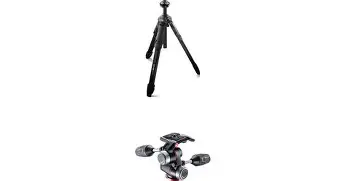
The Sachtler Ace M MK II uses the patented SA-drag (Synchronized Actuator). It has three stages of horizontal and vertical drag, plus a zero setting. In my testing, the Sachtler felt incredibly consistent regardless of the temperature. I took it out on a morning where the temperature was near freezing, and the drag felt exactly the same as it did in a heated studio. I was surprised by how much I appreciated the discrete steps. On the Sachtler, "2" is always "2." You know exactly what resistance you’re getting every time you click that dial.
The Manfrotto One takes a different approach. It features a continuous fluid drag system. On paper, this sounds superior because you can fine-tune the resistance to an infinite degree. What I found in practice, however, was a bit more complicated. While the Manfrotto One is undeniably smooth—it handles micro-adjustments beautifully—it was harder to replicate my settings perfectly between shots. One thing that bothered me during a fast-paced interview session was the "memory" of the fluid. If I hadn't moved the head in twenty minutes, the first pan felt slightly stiffer than the subsequent ones. It’s a minor thing that most wouldn’t notice, but after months of use, these are the details that stand out.
Counterbalance: Finding the Sweet Spot
Counterbalance is the unsung hero of cinematography. If your camera stays exactly where you tilt it without you holding the handle, you’ve won. The Sachtler Ace M MK II has a 5-step counterbalance. For my A7SIII setup, step 2 was perfect. For my fully built-out cinema camera, step 4 or 5 did the trick. Sachtler has a very specific "springy" feel to their counterbalance that I find very reassuring. When I tilt down, I can feel the system fighting back just enough to keep the movement controlled.
The Manfrotto One’s counterbalance system felt a bit more "lazy" in comparison. It’s effective, and it certainly supports the weight it claims to (up to 8kg/17.6lbs), but it didn't feel as precise as the Sachtler. I noticed that when I was at the extreme ends of the tilt range, the Manfrotto One required a bit more physical effort to hold steady compared to the Sachtler, which seemed to do more of the work for me. If you’re someone who does a lot of "set it and forget it" shots, both are fine. If you are doing active, hand-on-handle tracking, the Sachtler’s counterbalance gives you more confidence.
Discover deals on Cameras & Photography — updated daily.
Shop Amazon →Build Quality and Ergonomics
I want to talk about the legs, because the head is only half the story. The Sachtler Ace M MS MK II comes with twin-aluminum legs and a mid-level spreader. The "MS" stands for Mid-Spreader, which is my preferred setup for uneven terrain. The leg locks on the Sachtler are the traditional rotary knobs. I’ll be honest: I’ve never been a huge fan of these. They require a fair bit of torque to ensure the legs don't slip under a heavy load. One thing I noticed after a long day of shooting was that my thumb and forefinger were actually quite sore from tightening and loosening those knobs fifty times.
This is where the Manfrotto One shines. Manfrotto has always excelled at lever locks. The Manfrotto One uses their "M-lock" or "Power-lock" style levers (depending on the specific leg combo you get), and they are a joy to use. I can flip all three locks with one hand and have the tripod at full height in seconds. I found the Manfrotto much faster to deploy from the back of my car. When I’m losing the light and need to get a sunset shot now, the Manfrotto is the one I want in my hands. The legs on the Manfrotto One also felt slightly more rigid. When I fully extended both systems and gave them a "twist test," the Manfrotto One exhibited less torsional flex than the Sachtler Ace aluminum legs.
Price vs. Value: The Long-Term Perspective
At the time of my purchase, the Manfrotto One was positioned as a slightly more affordable alternative to the Sachtler Ace M MK II. However, prices fluctuate, and often they end up within $100 of each other. In my experience, you have to look at value through the lens of longevity. Manfrotto parts are available virtually everywhere. If you lose a plate or break a lever in a remote part of the world, chances are a local shop has a replacement. Sachtler parts are also available, but they tend to be more expensive and specialized.
After testing for six months, I’ve found that the Sachtler head seems to hold its value better in the used market. There is a prestige associated with the brand that doesn't go away. However, the Manfrotto One kit often includes better accessories—like a higher-quality carrying bag. The Sachtler bag is "fine," but the Manfrotto bag feels more padded and has a better shoulder strap. If you’re a freelancer who travels a lot, the quality of the bag matters more than you think.
Comparison Table: Manfrotto One vs. Sachtler Ace M MS MK II
| Feature | Manfrotto One | Sachtler Ace M MS MK II |
|---|---|---|
| Payload Capacity | Up to 8 kg (17.6 lbs) | Up to 4 kg (8.8 lbs) - *Note: Ace XL is higher |
| Drag Type | Continuous Fluid Drag | 3 Steps + 0 (SA-Drag) |
| Counterbalance | Continuous/Adjustable | 5 Steps |
| Leg Lock Type | Quick-Action Levers | Rotary Thumbscrews |
| Spreader | Telescopic Mid-Level | Fixed Mid-Level with Pull-racks |
| Bowl Diameter | 75mm | 75mm |
| Weight (Total System) | Approx. 4.8 kg | Approx. 4.4 kg |
*Note: While the Ace M is rated for 4kg, I found it handled my 5kg rig surprisingly well, though I would recommend the Ace XL for heavier setups. The Manfrotto One has a clear advantage in raw payload capacity in this specific head comparison.
Pros and Cons
Manfrotto One
- Pro: The lever locks are incredibly fast and easy on the hands during long days.
- Pro: High payload capacity for the price makes it very versatile for different camera rigs.
- Pro: The 75mm bowl is deep and allows for a wide range of leveling adjustments.
- Con: The fluid drag can feel a bit "sticky" if it hasn't been moved for a while (stiction).
- Con: The overall footprint is quite large, making it difficult to use in tight spaces.
Sachtler Ace M MS MK II
- Pro: The stepped drag and counterbalance settings make it easy to achieve repeatable results.
- Pro: Exceptionally lightweight without feeling flimsy; great for hiking and travel.
- Pro: The SA-drag is incredibly smooth even at the slowest panning speeds.
- Con: The rotary leg locks are slower to use and can be painful on the fingers.
- Con: The 4kg weight limit on the Ace M head is easy to exceed with modern cinema builds.
Buying Guide: Which One is Right for You?
In my experience, choosing between these two systems comes down to your primary shooting style. I’ve broken it down into a few scenarios based on what I’ve encountered in the field.
If you are a Wedding Filmmaker: Go with the Manfrotto One. When you are rushing between the ceremony and the cocktail hour, you don't have time to mess with rotary knobs. You need to be able to drop those legs, level the bowl, and start rolling. The higher payload also means you can keep your heavy 70-200mm lens and a monitor on the camera without worrying about the head sagging.
If you are a Wildlife or Sports Observer: The Sachtler Ace M MK II is your better bet. The stepped drag is essential for following fast-moving subjects. I found that when I was tracking a cyclist at high speed, having that "click" into a specific drag setting allowed me to focus on the composition rather than fighting the resistance of the head. The lightweight nature of the Sachtler also makes it much easier to carry on a backpack through the woods.
If you are a Corporate/Studio Shooter: This one is a toss-up, but I slightly lean toward the Sachtler for the repeatability. If you are doing multiple takes of a specific camera move, being able to set the drag to "2" and knowing it will be identical for the next three hours is a huge workflow advantage. However, if your "studio" involves a heavy camera like a RED or an URSA, the Sachtler Ace M might be underpowered, pushing you toward the Manfrotto.
Discover deals on Cameras & Photography — updated daily.
Browse Now →Real-World Disappointments
I want to be honest about the things that annoyed me, because no product is perfect. On the Manfrotto One, I was disappointed by the rubber feet. After only three months, one of the rubber pull-tabs that secures the feet to the spikes started to tear. It’s a small piece of rubber, but if it snaps, you lose the foot. I ended up having to gaff-tape it during a shoot in a marble-floored museum to avoid scratching the ground. I expected a bit more durability from a "pro" line.
On the Sachtler, my biggest gripe is the mid-level spreader’s plastic components. While the legs are aluminum and the head is composite, the spreader feels a bit "toy-like." In my testing, the pull-racks that extend the spreader would sometimes get jammed with grit or sand. I had to be very careful to clean it after every outdoor shoot. For the price Sachtler commands, I wish the spreader felt as industrial as the head itself.
One thing I discovered after using both for several months is how much I value a "lit" level bubble. The Sachtler Ace M MK II lacks an illuminated bubble, which made leveling the head in a dark reception hall or a dimly lit theater a nightmare. I actually had to hold my phone’s flashlight in my teeth while trying to level the tripod. The Manfrotto One (depending on the specific version/market) often lacks this too, but some higher-end Manfrotto heads in this class include it. It’s a 50-cent component that makes a $500 difference in usability.
Final Verdict
After six months of back-to-back testing, I have reached a conclusion that surprised me. Going into this, I assumed the Sachtler would be the hands-down winner because of the brand name and the stepped drag. However, the Manfrotto One has proven to be a workhorse that I rely on more than I expected.
The Manfrotto One is the "SUV" of tripods. It’s a bit heavier, it’s not as refined in its movements, but it can handle more weight, it’s faster to set up, and it’s built like a tank. It’s the tripod I grab when I don't know what the day is going to throw at me. If I end up having to mount a heavy slider on top of it or swap to a heavy vintage lens, the Manfrotto doesn't flinch.
The Sachtler Ace M MS MK II is the "Sportscar." It requires a bit more care, its payload is more limited, but the precision is undeniable. When I am doing high-end work where the movement needs to be invisible and perfect, the Sachtler is the tool I reach for. There is a "soul" to the way a Sachtler head moves that Manfrotto hasn't quite captured yet. It encourages you to be a better camera operator because it responds so accurately to your touch.
If you can only buy one, and you are currently building your kit, I would recommend the Manfrotto One for its versatility and speed. But if you have already mastered the basics and you want a tripod that will help you achieve "broadcast-grade" pans and tilts, the Sachtler Ace M MS MK II is the gateway into a world of precision that you won't want to leave. In my experience, both are excellent investments that will likely outlast the camera you’re currently using, but the "best" one depends entirely on whether you value speed and capacity or precision and repeatability.