Dyson Hot And Cool Hf1 Review: Real User Experience After 3 Months
When I first unboxed the Dyson Hot And Cool HF1 three months ago, I was skeptical. I’ve owned my fair share of oscillating fans and space heaters, most of which ended up in the back of my storage closet because they were either too loud, too bulky, or simply ineffective at maintaining a consistent temperature. However, living in an older apartment with drafty windows and a temperamental central heating system, I needed a solution that could handle the transition from the tail end of a humid summer into a biting winter. I decided to invest in the HF1, and after ninety days of daily use, I’ve finally gathered enough data—and personal frustration and delight—to share what it’s actually like to live with this machine.
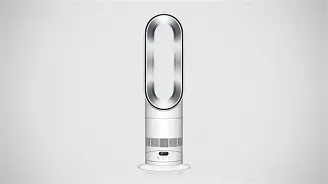
The Dyson HF1 is marketed as a high-performance fan and heater combo, utilizing Dyson’s signature blade-less Air Multiplier technology. But beyond the sleek aesthetics and the brand name, I wanted to know if it could actually replace two separate appliances and justify its premium price tag. In this review, I’ll walk you through my setup process, the performance over three different months of weather patterns, and the small details that only become apparent after you’ve lived with it long enough for the "new gadget" smell to wear off.
The Initial Handshake: Setup and First Impressions
Picking up the box, the first thing I noticed was the weight. It’s surprisingly light for its size, which made me worry about stability. Once I snapped the base into place—a simple click-and-turn mechanism—those worries mostly evaporated. It stands about 2 feet tall, making it perfect for floor placement or sitting on a side table. I placed mine in the corner of my living room, about six feet away from my desk.
Setting it up was refreshingly simple. There are no complicated Wi-Fi setups for this specific model (unlike some of the "Link" versions), which I actually preferred. I’m tired of everything needing an app. The HF1 comes with a small, curved remote that magnetically snaps to the top of the unit. This is a design touch I’ve grown to love because I am notorious for losing remotes in the couch cushions. The first time I turned it on, the whisper-quiet hum was immediate. I started in "Cool" mode just to see how the airflow felt, and what I found was a focused, smooth stream of air that lacked the "choppiness" of traditional bladed fans.
Month One: Surviving the Heat
My first month with the HF1 was during a period of unseasonably warm weather. I used the cooling fan feature almost exclusively. What I noticed immediately was the "Jet Focus" control. Dyson allows you to toggle between a concentrated personal flow and a wide-angle room flow. Since I work from home, I kept it on the concentrated mode, aiming it directly at my workspace. It didn't blow my papers around like my old box fan did, but it kept me perfectly comfortable.
However, I did encounter my first minor disappointment during this month. On the highest settings (8 through 10), the HF1 does get significantly louder. It’s a high-pitched whirring sound, almost like a miniature jet engine. In my experience, while it’s great for a quick blast of air to cool down after coming in from outside, I couldn't keep it on level 10 while trying to take a video call. I found the "sweet spot" to be level 4 or 5—enough airflow to feel, but quiet enough to fade into the background.
Month Two: The Transition to Heat
As the leaves started to turn and my apartment dropped to a chilly 62 degrees, I finally pressed the red button on the remote to engage the heating mode. This is where I was truly impressed. Most space heaters take five to ten minutes to really change the "feel" of a room. The HF1 uses ceramic plates that heat up almost instantly. Within two minutes of Turning it on, the air coming out was genuinely hot, not just lukewarm.
Discover deals on Electronics — updated daily.
Browse Now →One thing that bothered me initially was the smell. For the first twenty minutes of heating, there was a distinct "burnt dust" aroma. This is common with heaters that have sat idle, but it was quite strong. Thankfully, it cleared up quickly and hasn't returned. I appreciated the thermostat control; I set it to 70 degrees, and the machine would intelligently ramp down once it reached that temperature. I noticed that it doesn't just shut off abruptly; it tapers the airflow, which prevents that jarring silence you get with cheaper thermostats.
Month Three: Living with the Quirks
After three months, the HF1 has become a permanent fixture in my life. I’ve learned its personality. For instance, I noticed that the oscillation is incredibly smooth—it doesn't creak or judder like cheaper fans. I’ve used the sleep timer extensively, setting it to turn off two hours after I go to bed. It’s a reliable feature that hasn't failed me once.
However, there is a maintenance aspect I didn't fully anticipate. Because of the way the air intake is designed at the base, it acts a bit like a vacuum for pet hair and dust. I have a long-haired cat, and after 90 days, I could see a visible layer of grey fuzz accumulating on the intake perforations. I had to use a soft brush and a vacuum to clear it out. If you don’t keep this clean, the performance definitely starts to dip, and the motor sounds like it’s working harder. It isn't a dealbreaker, but it is something a real owner needs to be aware of.
What I Loved and What I Didn't
In any real-world testing, there are going to be highs and lows. Here is the summary of my pros and cons after my 3-month trial period with the Dyson HF1.
- Pro: Instant Heat Delivery. The ceramic heating plates are incredibly efficient. I never had to wait for the units to "warm up."
- Pro: Magnetic Remote Storage. It sounds like a small thing, but never having to hunt for the remote because it lives on top of the machine is a huge quality-of-life win.
- Pro: Safety Features. As someone with a cat, the tip-over automatic shut-off and the lack of exposed heating elements give me massive peace of mind.
- Pro: Design Aesthetics. Let’s be honest, it looks great. It doesn't look like a "utility" item; it looks like a modern piece of decor.
- Con: Price Point. It is significantly more expensive than buying a separate high-end fan and a separate heater. You are paying for the brand and the engineering.
- Con: Noise at High Speeds. While level 1 is silent, level 10 is definitely noticeable and can be distracting for light sleepers or during quiet work.
- Con: Dust Accumulation. The base requires regular wiping down to ensure airflow remains optimal, especially in homes with pets.
Dyson HF1 vs. Traditional Alternatives
I put together this table to help visualize how my experience with the HF1 compared to the standard ceramic heaters and pedestal fans I’ve used in the past. This covers the three main metrics I care about: speed of temperature change, noise levels, and footprint.
| Feature | Dyson Hot + Cool HF1 | Standard Ceramic Heater | Traditional Pedestal Fan |
|---|---|---|---|
| Heating Speed | Near Instant (Ceramic Plates) | Moderate (3-5 minutes) | N/A |
| Airflow Quality | Smooth, constant stream | Turbulent, often drying | Buffeted, "choppy" feel |
| Safety | High (No blades, auto-shutoff) | Moderate (Exposed grilles) | Low (Blades, tip hazard) |
| Noise (Mid Range) | 45-50 dB (Quiet hum) | 55-60 dB (Mechanical rattle) | 50-55 dB (Wind noise) |
| Space Needed | Small footprint (approx. 8" base) | Varies (usually bulky) | Large circular base |
Buying Guide: Is the HF1 Right for You?
Before you commit to the Dyson HF1, you need to evaluate your specific living situation. Based on my three months of use, here is who I think this machine is for—and who should probably skip it.
Discover deals on Electronics — updated daily.
See Deals →If you live in a small-to-medium apartment and are tight on storage space, the HF1 is a dream. The ability to tuck away one machine that handles both seasons is invaluable. I don't miss the days of hauling a dusty box fan out of the closet every June. Furthermore, if you have children or pets, the safety profile is the gold standard. There are no fast-spinning blades for little fingers to get caught in, and the exterior of the machine stays cool to the touch even when it’s pumping out heat.
Conversely, if you are looking to heat or cool a massive, open-concept living room with 20-foot ceilings, the HF1 might struggle. In my experience, it’s best as a "personal climate" device or for rooms under 200 square feet. Above that, you’ll find yourself running it on level 10 constantly, which leads to the noise issues I mentioned earlier. Also, if you are a "smart home" enthusiast who needs to control everything from an iPhone, make sure you check if you are buying the base HF1 or the "Link" version, as the base model is strictly remote-controlled.
Lastly, consider your sensitivity to noise. If you need absolute silence to sleep, the lower settings are fine, but if you expect high-velocity airflow without any sound, that technology doesn't really exist yet. The Dyson is quieter than most, but it isn't magical.
Conclusion: The Verdict After 90 Days
After three months, I’ve stopped thinking of the Dyson HF1 as a "fancy fan." It has simply become the way I regulate my environment. I noticed that I no longer reach for my heavy sweaters the minute the sun goes down; I just tap the red button on the remote and let the room come up to 70 degrees. I’ve grown accustomed to the smooth, non-turbulent airflow that doesn't make my eyes feel dry while I’m working at my computer.
Is it perfect? No. The price is a hurdle, and the maintenance requirement for keeping the intake clean was a bit of a surprise. I also wish the higher speed settings were a few decibels lower. However, the sheer convenience of having one beautifully designed machine that "just works" for both summer and winter has won me over. I was surprised by how much I valued the small design details—the magnetic remote, the precise thermostat, and the tilt-and-pivot base. If you can stomach the initial investment, the HF1 offers a level of comfort and aesthetic integration that standard heaters and fans simply cannot match. In my experience, it isn't just about moving air; it’s about making your space more livable, and for me, it has done exactly that.