Difference Between Amazon Omni Qled Tv 2025 and Kef Xio Explained
The landscape of home entertainment has shifted dramatically as we move through 2026. While the previous decade was defined by a race toward higher resolutions, the current market is defined by a clash of philosophies: integrated smart ecosystems versus specialized high-fidelity performance. This clash is perfectly encapsulated in the comparison between the Amazon Omni QLED TV 2025 and the KEF Xio. At first glance, these devices appear to occupy different categories, yet they are increasingly finding themselves on the same shortlists for modern homeowners looking to anchor their living rooms with a premium display solution.
The Amazon Omni QLED TV 2025 represents the pinnacle of Amazon's hardware strategy, blending a sophisticated Quantum Dot display with a deep, pervasive integration of ambient intelligence. It is designed to be the "always-on" heart of a smart home. On the other hand, the KEF Xio is a testament to the legendary audio brand's expansion into visual systems, prioritizing color accuracy, cinematic motion, and an unrivaled acoustic experience that leverages KEF’s decades of transducer expertise. For buyers, the choice isn't just about pixels or brightness nits; it is about how they intend to interact with their television on a daily basis.
Analysis of the Amazon Omni QLED TV 2025
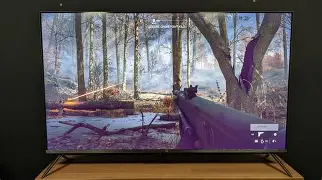
The 2025 iteration of the Omni QLED Series is a significant leap forward from its predecessors. Amazon has focused heavily on the concept of the "Ambient Experience." Unlike traditional TVs that become a "black hole" on the wall when turned off, the Omni QLED 2025 uses advanced presence sensors and low-power modes to transform into a dynamic art gallery, a dashboard for smart home controls, and a hub for information at a glance. It utilizes a sophisticated full-array local dimming (FALD) system that has been tuned for 2025 to minimize "blooming" and enhance the depth of black levels, which was a point of contention in earlier budget-friendly models.
Under the hood, the Omni QLED 2025 features an upgraded MediaTek chipset specifically optimized for Fire TV OS. This provides a fluid, responsive interface that handles 4K HDR streaming and cloud gaming through services like Luna with remarkable ease. The QLED panel itself offers a wide color gamut, covering over 95% of the DCI-P3 space, ensuring that HDR10+ and Dolby Vision content remains vibrant and true to life. For the typical user who lives within the Amazon ecosystem, the ability to control Zigbee and Matter-compatible devices directly from the television without needing a separate bridge is a compelling convenience factor.
Pros and Cons of the Amazon Omni QLED TV 2025
- Pro: Extreme ease of use for Alexa users with hands-free voice control and integrated smart home dashboards.
- Pro: The Ambient Experience mode is industry-leading, offering beautiful artwork and helpful widgets that make the TV useful even when not watching movies.
- Pro: Exceptional value proposition, offering high-end features like full-array local dimming at a competitive price point.
- Pro: Improved peak brightness in the 2025 model makes it a viable choice for bright living rooms with significant natural light.
- Con: The Fire TV interface is heavily ad-supported and prioritized toward Amazon’s own content, which may annoy some purists.
- Con: Audio performance, while decent, lacks the height and soundstage found in dedicated high-fidelity systems.
- Con: Motion handling for sports can occasionally show artifacts compared to higher-end dedicated cinema displays.
Analysis of the KEF Xio
The KEF Xio enters the market from a completely different pedigree. KEF is primarily known for its world-class loudspeakers, and the Xio is their attempt to harmonize visual brilliance with sonic perfection. The Xio uses a proprietary mini-LED backlighting system that provides much tighter control over contrast than a standard QLED. It targets the "prosumer" and the cinephile who values the creator's intent above all else. The color calibration out of the box is exceptional, often requiring no further adjustment to hit delta-E values below the threshold of human perception.
Where the Xio truly separates itself is in the "Uni-Q" integrated sound system. KEF has managed to embed their signature driver technology into the chassis of the Xio, using the screen itself as a vibrating surface to ensure that audio emanates directly from the mouths of the characters on screen. This creates a soundstage that is significantly wider and more precise than the Amazon Omni. The Xio also runs an extremely clean, lightweight version of Android TV (or Google TV), which avoids the heavy-handed marketing found in Amazon's ecosystem, focusing instead on app flexibility and high-bitrate playback support for local media servers like Plex.
Shop the latest TVs & Home Theater picks on Amazon.
View Offers →Pros and Cons of the KEF Xio
- Pro: Best-in-class integrated audio that eliminates the immediate need for a soundbar or external speakers in mid-sized rooms.
- Pro: Stunning industrial design with premium materials and a minimalist aesthetic that fits high-end interior designs.
- Pro: Superior motion interpolation and 120Hz/144Hz support, making it an excellent choice for PlayStation 5 and Xbox Series X gamers.
- Pro: High-precision mini-LED dimming zones resulting in deeper blacks and higher peak highlights for HDR content.
- Con: Significantly higher price point compared to mass-market QLED televisions.
- Con: Lacks the deep smart-home integration features of the Amazon ecosystem.
- Con: The remote control, while premium, follows a minimalist logic that may require a learning curve for less tech-savvy users.
Hardware and Performance Comparison
When comparing these two units, the technical disparity becomes evident in how they handle light and data. The Amazon Omni QLED 2025 is built on efficiency and "smart" features. Its sensor array includes an ambient light sensor that not only adjusts brightness but also color temperature based on the time of day, ensuring that the TV doesn't look overly blue in the evening. The KEF Xio, however, focuses on raw power. Its processor is dedicated to image reconstruction and upscaling, taking low-resolution 1080p content and using AI-driven texture enhancement to make it look native to the 4K panel.
In terms of gaming, the KEF Xio is the clear winner for enthusiast gamers. It supports full HDMI 2.1 bandwidth on all ports, allowing for VRR (Variable Refresh Rate) and ALLM (Auto Low Latency Mode) without compromise. The Amazon Omni 2025 supports these features to an extent, but it is often limited to two HDMI 2.1 ports, one of which doubles as the eARC port, which can create connectivity bottlenecks if you have multiple high-end consoles and an external audio system.
Comparative Specifications Table
| Feature | Amazon Omni QLED 2025 | KEF Xio |
|---|---|---|
| Panel Type | QLED (Full-Array Local Dimming) | Mini-LED (High-Zone Count) |
| Operating System | Fire TV OS 8 (Ambient Edition) | Google TV / Android TV |
| Audio Technology | Stereo with Dolby Atmos passthrough | Integrated Uni-Q Driver Array |
| Smart Home Integration | Native Alexa, Zigbee, Matter, Thread | Google Assistant, Matter |
| Gaming Features | 60Hz/120Hz (Size dependent), VRR | 144Hz, VRR, ALLM, G-Sync compatible |
| Brightness (Nits) | ~600-800 peak | ~1200-1500 peak |
| Build Materials | Premium plastic and metal stand | Brushed aluminum and glass |
Real-World Use Cases and Buying Guide
Deciding between the Amazon Omni QLED 2025 and the KEF Xio requires a candid look at your living room habits. A television is no longer just a screen; it is a piece of furniture that dictates the flow of a room. For families, the Amazon Omni is often the superior choice. The "Profiles" feature in Fire TV has matured to the point where Alexa can recognize different family members' voices and suggest content accordingly. If the kids want to see their chore list or the parents need to check who is at the front door via a Ring doorbell, the Omni provides a level of utility that the KEF Xio simply isn't designed for.
Conversely, if you have a dedicated media room or a sleek, modern apartment where you want to minimize clutter, the KEF Xio is a revelation. Many buyers spend thousands on a TV only to realize they also need a $500 soundbar and a $300 subwoofer to make it sound decent. The Xio incorporates that cost into its premium price, providing a "one-and-done" solution. Its mini-LED panel is also significantly better for dark-room viewing, where the deeper blacks prevent the "letterbox bars" on movies from appearing grey, a common issue with standard QLED technology.
Who should buy the Amazon Omni QLED TV 2025?
You should opt for the Amazon Omni if you value an integrated lifestyle. If your home is already populated with Echo speakers, Ring cameras, and smart bulbs, this TV acts as the ultimate control panel. It is also the correct choice for those who want a large-screen experience on a reasonable budget without sacrificing modern perks like hands-free voice control and high-quality HDR. It is best suited for bright living rooms where the TV is used for everything from background music and weather updates to casual evening streaming.
Who should buy the KEF Xio?
The KEF Xio is designed for the audiophile and the dedicated cinephile. If you find yourself distracted by minor motion stutters or if you are sensitive to thin, tinny TV speakers, the Xio will justify its price tag within the first ten minutes of use. It is a piece of high-end equipment that happens to be a TV. It is also the better choice for those who use their TV as a primary gaming monitor for PC or high-end consoles, as its input lag and refresh rate capabilities significantly outclass the Amazon offering.
Shop the latest TVs & Home Theater picks on Amazon.
View Offers →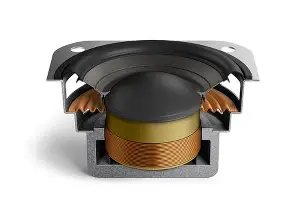
Installation and Longevity
Another factor to consider is the physical installation. The Amazon Omni QLED 2025 is designed with a standard VESA mount and a relatively slim profile, but it doesn't hide its cables quite as elegantly as the Xio. The KEF Xio often comes with a specialized "zero-gap" mount and an integrated cable management system that routes all connections through the stand or a single discreet umbilical cord. From a longevity standpoint, KEF has a history of supporting their hardware with firmware updates for years, whereas Amazon devices are often pushed toward new hardware cycles every three to four years to keep up with their increasingly heavy OS requirements.
Software support is also a differentiator. Google TV on the KEF Xio is generally considered more "open," allowing for easier sideloading of specialized apps and a more neutral content recommendation engine. Amazon’s Fire OS is incredibly powerful for those who use Prime Video and MGM+, but it can feel restrictive for those who prefer to source their 4K content from various disparate platforms. In 2025, the ability of a TV to remain fast as apps get more demanding is paramount, and the higher-performance silicon in the KEF Xio gives it a slight edge in "future-proofing."
Conclusion
The choice between the Amazon Omni QLED TV 2025 and the KEF Xio ultimately boils down to a choice between convenience and fidelity. The Amazon Omni 2025 is the smartest TV in its price bracket, turning the television into a proactive member of the household that assists with daily tasks and blends into the decor with its Ambient Experience. It is a triumph of software-driven value that makes premium features accessible to a wider audience.
The KEF Xio, by contrast, is a triumph of engineering. It refuses to compromise on the fundamental pillars of the home theater experience: light control and sound pressure. By marrying a high-zone mini-LED panel with the iconic Uni-Q audio technology, KEF has created a device that appeals to the senses in a way that goes beyond mere smart features. Whether you choose the helpful, integrated world of Amazon or the immersive, high-performance world of KEF, both TVs represent the incredible technological strides the industry has made in 2025 and 2026, ensuring that there is no longer a need to settle for "just a screen."