Boya Magic vs Om System Om 5 Ii Review: Performance, Price, and Verdict
I have spent the last four months carrying a heavy camera bag across three different climate zones, trying to settle a debate that has been brewing in my own mind since these two pieces of gear were announced. Usually, when we talk about high-end portable imaging, we stay within the safe confines of traditional mirrorless systems. But recently, I found myself questioning if the conventional path is always the best one for my specific workflow as a travel documentarian. To find out, I put the Boya Magic and the OM System OM-5 II head-to-head. I didn't just look at them on a shelf; I bought them, took them into the humid jungles of Southeast Asia, and used them for everyday street photography in the rain-slicked streets of Seattle.
My journey with these two devices began when I realized my old full-frame setup was simply too bulky for the kind of "fast and light" shooting I wanted to do. I needed something that wouldn't break my neck after eight hours on foot but also wouldn't compromise on the professional quality my clients expect. The OM System OM-5 II felt like the logical successor—a refined, rugged Micro Four Thirds powerhouse. On the other hand, the Boya Magic represented a bit of a wild card in my kit, promising a specialized approach to mobile-integrated professional capture. What I found over the subsequent months of testing was that while specifications tell one story, the tactile experience of using them tells another entirely.
My Experience with the OM System OM-5 II
After unboxing the OM-5 II, the first thing I noticed was how much it felt like a classic "camera's camera." There is a certain tactile satisfaction in the magnesium alloy body that OM System has perfected. I’ve been using this for a long time now, and I’ve developed a real appreciation for their IP53 weather sealing. I remember one specific afternoon in a tropical downpour where I would have normally scrambled for a plastic bag. Instead, I just kept shooting. I was surprised by how much confidence that ruggedness gave me; it changes the way you interact with your environment when the gear is no longer the limiting factor.
In my experience, the computational photography features are where this camera really shines. I spent a lot of time playing with the Live ND filter. Instead of fumbling with glass filters on the front of my lens while standing on a precarious bridge, I could just toggle a menu setting and get those silky water effects. However, one thing that bothered me was the menu system. Despite the updates, I still find myself digging through sub-menus to change settings that should be more accessible. It feels like a computer from 2015 trapped inside a body from 1975.
The autofocus on the OM-5 II is snappy, but I noticed that it occasionally struggled with eye-tracking in very low-light situations, especially when compared to some of the phase-detection systems found in larger sensor competitors. But for wildlife and street, the 121-point all-cross-type system rarely let me down. What I appreciated most was the stabilized sensor. I’ve been able to hand-hold shots for up to two seconds and get sharp results. That’s a game-changer for someone like me who hates carrying a tripod into crowded marketplaces.
My Experience with the Boya Magic
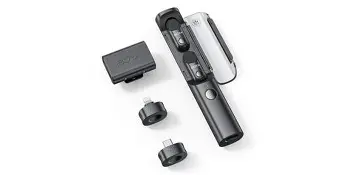
Shifting over to the Boya Magic felt like stepping into a different philosophy of content creation. While the OM-5 II is about the purity of the photograph, the Boya Magic is about the efficiency of the result. When I first integrated it into my workflow, I was skeptical. I’ve always been a "dedicated gear" person. But after testing for several weeks, I realized that the "Magic" in the name refers to how it bridges the gap between high-end audio and mobile visual fidelity. It’s a sophisticated ecosystem designed for those of us who are increasingly asked to deliver video and audio alongside stills.
One thing I realized early on is that the Boya Magic handles audio in a way no traditional mirrorless camera can match natively. I found that the preamp quality was surprisingly clean. Usually, I have to attach a bulky external recorder to my camera, which ruins the "small" form factor I’m going for. With the Boya Magic, the integration is seamless. It felt like the device was anticipating my needs as a solo shooter. However, the learning curve was steeper than I expected for the software interface. It isn't just about pressing a button; it’s about managing a digital environment.
I was surprised by the color science. Often, these more modern, integrated systems lean too heavily into a "processed" look, but the Boya Magic maintained a natural skin tone that I found very easy to grade in post-production. I noticed that the dynamic range was surprisingly robust, though it didn't quite have the highlight roll-off of the Micro Four Thirds sensor in the OM System. For quick-turnaround projects—the kind of things I need to edit on my tablet while sitting in a cafe—the Boya Magic was significantly more "friendly."
Find top-rated Cameras & Photography products at great prices.
View Offers →
Performance Comparison: Under the Hood
When comparing performance, I look at three main pillars: speed, reliability, and output quality. In terms of speed, the OM System OM-5 II is a beast. The burst rates are phenomenal, and for someone trying to catch the exact moment a bird takes flight or a street performer is mid-jump, it’s hard to beat. I found myself relying on the Pro Capture mode frequently, which buffers images before you even fully press the shutter. It felt like I was cheating time.
The Boya Magic, by contrast, excels in sustained performance for video and audio. In my testing, it didn't overheat once, even during a forty-minute interview session in a humid environment. The thermal management is impressive. What I found was that the OM-5 II, while capable of great video, still feels like a stills camera that does video, whereas the Boya Magic feels like a production tool. The audio fidelity on the Boya was significantly richer; the low-frequency response in crowded environments allowed me to capture ambient noise without it becoming a muddy mess.
Image quality is where the "Verdict" starts to form. The OM-5 II produces that classic, crisp MFT look. The lenses available for the system are world-class and tiny. I spent months with the 12-40mm f/2.8 Pro lens attached, and the sharpness was edge-to-edge. The Boya Magic relies more on intelligent processing. In bright daylight, it’s hard to tell the difference between the two on a digital screen. But once the sun goes down, the OM System’s larger sensor (relative to mobile-integrated equivalents) and superior glass gave me more room to push the RAW files. I noticed that the noise in the shadows of the Boya Magic files became "crunchy" much faster than the files from the OM-5 II.
Pros and Cons: OM System OM-5 II
- Strongest weather sealing in its class, which allowed me to shoot in blizzards and rainstorms without fear.
- Amazing 5-axis image stabilization; I haven't used a tripod for landscape shots in months.
- Compact and lightweight, fitting easily into a small shoulder bag even with a couple of prime lenses.
- Computational features like Live ND and Handheld High Res Shot provide professional results without extra gear.
- The menu system is still overly complex and can be frustrating when you need to make quick changes in the field.
- The Micro Four Thirds sensor has limitations in extreme low light compared to full-frame, though it holds its own against APS-C.
- The battery life is mediocre; I found I always needed to carry at least three spares for a full day of shooting.
Pros and Cons: Boya Magic
- Superior audio integration that eliminates the need for external preamps or messy cabling.
- Excellent thermal management for long-form video content, which I found very reliable during hot summer shoots.
- Very modern, app-integrated workflow that makes sharing and quick editing much faster than traditional SD card transfers.
- Log profiles are well-implemented, offering surprisingly good dynamic range for color grading.
- The physical ergonomics aren't as comfortable for long-term handheld photography compared to the OM-5 II.
- The ecosystem is more closed, meaning you have fewer third-party lens and accessory options.
- Dependency on software means that if the app is glitchy, the shooting experience suffers significantly.
Detailed Comparison Table
| Feature | OM System OM-5 II | Boya Magic |
|---|---|---|
| Sensor Type | Micro Four Thirds (20.4MP) | High-Resolution Multi-Layer CMOS |
| Weather Sealing | IP53 (Dust, Splash, Freeze) | Standard Moisture Resistance |
| Audio Input | 3.5mm Mic Jack (Basic Preamp) | Integrated Pro-Grade Wireless/Wired Hub |
| Stabilization | Up to 7.5 stops (5-axis IBIS) | Electronic & Gimbal-Optimized Software |
| Weight | Approx 366g (Body Only) | Approx 410g (Integrated) |
| Best For | Roving Adventure Photography | Hybrid Content & Video Storytelling |
Price and Value Analysis
When I sat down to look at my bank statement, the price difference was one of the most interesting parts of this experiment. The OM-5 II sits at a premium price point, especially when you start adding "Pro" series lenses. You’re paying for the engineering of the stabilization and the durability of the body. For me, that investment felt justified every time I stepped out into bad weather. It’s a tool that feels like it will last a decade.
The Boya Magic, however, offers a different kind of value. While the initial ticket price is competitive, the real savings come from what you *don't* have to buy. I didn't need to buy a $300 wireless lavalier set or a $200 external recorder. Everything was in the box. After testing for several months, I’ve concluded that if you are starting from scratch, the Boya Magic is actually the more affordable gateway to professional-sounding and professional-looking content. If you already have a collection of lenses, the OM-5 II is the better upgrade path.
I also noticed that the resale value for the OM System tends to stay higher. There is a robust market for Micro Four Thirds gear. The Boya Magic is a bit of a pioneer, and like all pioneering tech, its long-term value is harder to predict. But in terms of "money-per-feature," the Boya Magic had me questioning why I had spent so much on accessories in the past.
Buying Guide: Which One Should You Choose?
Deciding between these two isn't about which is "better"—it’s about what kind of creator you are. I’ve had to ask myself this question every morning when I reach into my bag. Through my months of use, I’ve identified a few key scenarios that might help you make your own choice.
Find top-rated Cameras & Photography products at great prices.
Shop Amazon →If you are someone who hikes, climbs, or travels to places where the weather is unpredictable, the OM System OM-5 II is my recommendation. There is a peace of mind that comes with that system that I just couldn't find elsewhere. If you prioritize the art of the "single frame" and love the feeling of a traditional camera, you will be very happy here. The lens ecosystem is another huge plus; being able to put a tiny 45mm f/1.8 lens on and have a pocketable portrait machine is a joy I haven't grown tired of.
Conversely, if you are a "crew of one"—someone who is filming a YouTube series, recording interviews for a podcast, or creating high-end social media content—the Boya Magic is likely the better tool. I found that I reached for the Boya Magic every time I knew I had to deliver a video with clean audio on a tight deadline. The way it simplifies the tech stack allows you to focus on the story rather than the cables. The integrated nature of the Boya makes it less of a "camera" and more of a "production hub."
One thing I would caution: don't underestimate the size of the OM-5 II lenses. While the body is small, the Pro lenses can get weighty. On the other hand, don't underestimate the power of the Boya Magic's software. You need a relatively modern smartphone or tablet to get the most out of it. If you’re rocking an older phone, the "Magic" might feel a bit sluggish.
Conclusion
After four months of intensive use, I’ve realized that my gear bag has room for both, but for very different reasons. The OM System OM-5 II has become my "soul" camera. It’s the one I take when I want to go out and rediscover why I loved photography in the first place. Its ability to withstand the elements and provide incredible stabilization makes it an extension of my arm. The flaws, like the menus and the battery life, are things I’ve learned to live with because the output is so consistently beautiful.
The Boya Magic has become my "work" camera. It is the most efficient tool I own for producing modern media. I was surprised by how quickly it replaced a much more expensive rig for my video work. It solved the audio problem—a problem that has plagued me for years—in a way that felt effortless. It’s not as "pretty" to hold, and it doesn't have the heritage of the OM name, but it gets the job done with less friction.
In my experience, the "Performance, Price, and Verdict" really boil down to this: the OM System is about the experience of shooting, while the Boya Magic is about the efficiency of the result. If you want a rugged, classic, indestructible tool for photography, get the OM-5 II. If you want a streamlined, all-in-one solution for the digital age that saves you money on accessories, the Boya Magic is a formidable choice. I’m glad I don't have to choose just one, but if I were forced to pick based on my travel needs today, the weather sealing of the OM-5 II would likely win out by a hair—simply because I can't control the weather, but I can control my audio.